Wednesday, December 27, 2006

Communists celebrate enslavement of Tibet

On June 10, 2001 Indian Communists celebrated the enslavement of Tibet.


Vol. XXV
No. 23
June 10,2001

50th Anniversary of Tibetan Liberation Celebrated

P Malhotra
THE fiftieth anniversary of the peaceful liberation of Tibet was held at New Delhi on June 5 at A K Gopalan Bhawan in which several prominent leaders participated. The large gathering was addressed, among others, by CPI(M) general secretary Harkishan Singh Surjeet, CPI general Secretary A B Bardhan, Devarajan of the Forward Bloc and the Ambassador of the People’s Republic of China’s to India who delighted everyone by speaking in good Hindi before switching over to English.
Addressing the audience, Harkishan Singh Surjeet complimented the people of Tibet for the progress made in the last 50 years of liberation. He said the people of Tibet had made considerable progress and there was all-round development. The Chinese government was also complimented for the development it had undertaken in Tibet. Surjeet said the developed world had been misleading the people by being critical of the progress of the common masses of Tibet. In fact the underprivileged had seen a remarkable progress in a very difficult terrain and atmosphere. Surjeet was critical of the people who doubted Tibet being a part of China. He said if Tibet had not been liberated the region would never have made the remarkable progress that it has. Inspite of all propaganda against China, the fact is that the people of Tibet had cooperated with the Chinese government after their liberation in 1951 which fact had led to full development of the area.
In his short speech, Bardhan highlighted the fact that the life expectancy in Tibet had gone up to over 65 years from 36 years in 1950. This in itself showed that the people’s life standard had improved and they were better off. He criticised the double standards of the NDA government where the government had one stand on Tibet being an integral part of China while the former defence minister George Fernandes spoke of Tibet’s independence.
Devarajan said the coming together of Tibet and China is a fact of life and had been done in the 13th centaury. There was now no need to go over it again and again.
Speaking in Hindi, the Chinese ambassador complimented the CPI(M) for having organised this function and thanked all the important leaders present. He said Tibet is today an autonomous territory where the Chinese central government had invested large sums of money for all-round development. There was total religious freedom in the region. All people were allowed to perform their religious practices and hold Buddhist beliefs.
The ambassador said the Chinese central covernment had carried democratic reforms in Tibet in 1959 which changed the life of 95per cent of the population. These former serfs are now masters of their own destination and the entire class, who had earlier lived in abject poverty, is now well off. At the time of the liberation, 5 per cent of the Lamas controlled 90 per cent of all land and 80 per cent of the social wealth. Today the rural income per person has gone up to over 1100 yuan in Tibet; the urban per capita income is over 5000 yuan.
The ambassador said the signing of the 17-article agreement on the peaceful liberation of Tibet in 1951 was an epoch-making turning point in the history of Tibet. This had brought in stability, unity and a transformation from poverty to prosperity, from isolation to openness.
He said even the Buddhist monasteries were being improved. There was no tax in Tibet. The central government has invested over 441 billion yuan in Tibet for its all-around development.
The Chinese ambassador looked forward to better relationships with India.
Proposing the vote of thanks, CPI(M) Polit Bureau member Sitaram Yechury thanked all present and the Chinese delegation for have participated in the function. He pointed out that the Tibetans had improved their standard of living and that the life in Tibet was much easier than it could be otherwise because of the difficult physical conditions there. He looked forward to a closer relationship between China and India. (INN)


Source: People's Democracy
URL : http://pd.cpim.org/2001/june10/june10_tibet.htm
Tags: CPM, CPM-LEADERS, COMINTERN

Labels: , ,

Tuesday, October 17, 2006

It's official: China is India's security threat

Excerpt:

It's official: China is India's security threat

By Indrajit Basu
The Indian government is drafting a new foreign direct investment (FDI) policy that will, for the first time, include China on a list of countries not limited to Pakistan and Bangladesh that are considered a sensitive for India's national security.

New Delhi has long been wary of allowing Chinese to invest in sensitive sectors, such as ports and telecommunications, but the new edict will extend security reviews to all sectors, including such innocuous sectors as household appliances. For the first time China will be officially labeled a "security risk".

Once the new FDI norms come into effect, it would mean an end to all automatic clearances for Chinese investments under India's supposedly liberalized FDI laws as each an every investment coming from China will have to undergo scrutiny by the Indian security agencies.

...


Tags:
Source: Asia Times Online

Labels:

Monday, October 16, 2006

CPM delegation to meet Chinese FM for first time


CPM delegation to meet Chinese FM for first time
Beijing, Oct 16: In an unprecedented event, a delegation of the Communist Party of India (Marxist), which is here on a visit to China, will hold parleys with the country's Foreign Minister tomorrow.

The meeting between the CPI(M) delegation led by politburo member Sitaram Yechury, which arrived here today, and Li Zhaoxing comes ahead of Chinese President Hu Jintao's first visit to India.

It is for the first time for a CPI (M) delegation to meet with a Chinese Foreign Minister, Yechuri said.

"It is an unprecedented event," he said, adding the Chinese side attaches importance to the visit which comes ahead of Hu's maiden trip to India in November. Hu is also general secretary of the ruling Communist Party of China (CPC) and chairman of the Central Military Commission (CMC), the top military organ.

Invited by the international department of CPC, the delegation's visit is aimed at promoting bilateral ties and cementing party-to-party relations. They will also meet a politburo member of the CPC.

Yechuri also said China is keen to strengthen relations with India and the visit also takes place at a time when India and China are marking 2006 as the 'Year of India- China Friendship.'

The CPI-M delegation would also meet with the vice minister of the CPC's international department, Liu Hongkai and discuss party-to-party affairs.

They will have in-depth exchanges with the CPC on party-to-party affairs, international and regional situations.

The CPC leadership is expected to brief the CPI-M leaders on the key decisions taken at the party's plenum held last week, especially the plan to establish a 'harmonious society.'

The CPI-M delegation also includes Tripura Chief Minister Manik Sarkar. The other members are former West Bengal Minister Mohammad Ameen, Central Committee member and MLA from Andhra Pradesh P Rammaih and party leader from Maharashtra Kumar Shiralkar.

During their visit, the delegation will travel to Tianjin, a northern port city, Guiyang, capital of Guizhou province, an under-developed area in southwest China as well as Shanghai, the Communist giant's gleaming metropolis.

They will interact with Chinese leaders to find ways to carry forward the activities of the special study group formed to resolve the border dispute between India and China besides touching upon other aspects of bilateral relations, sources said.

They will discuss the relevance of India-China-Russia triangle, India-Brazil-South Africa-China quartet and the possibilities of formation of an Brazil-India-China-Russia- South Africa grouping, they said.

The visit comes at a time when there is a growing bonhomie in bilateral ties as also increase in trade and investment and high-level visits. Chinese Premier Wen Jiabao had visited India last year and had revived the age-old "Hindi-Chini Bhai" slogan.

CPI(M) as also other Left parties have taken up strongly with the Manmohan Singh government, which they support from outside, the hurdles in the wake of Chinese investments in key sectors like ports and other infrastructure.

Tags:
Source:Zee News

Labels: ,

Sunday, October 15, 2006

Chinese Communists shoot Tibetans on a piligrimage

Warning : This is a footage of Chinese soldiers killing unarmed Tibetans on a pilgrimage to visit the Dalai Lama.

LINK

Tags:

Labels: ,

Wednesday, October 11, 2006

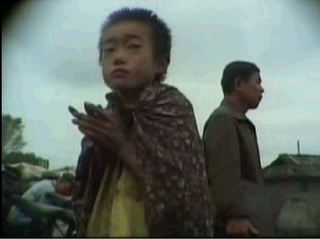
The World According To CPM

How CPM sees the world


THE SAD REALITY (i.e., "capitalist propaganda")

A hungry North Korean Orphan


Tags:


Source : youtube, google video

Labels: ,

US pushed N Korea to brink: CPM

CPM advises India to abandon nuclear weapons, justifies North Korea going nuclear.

US pushed N Korea to brink: CPM
From Shruba Mukherjee DH News Service New Delhi:
Terming the nuclear test conducted by the Democratic Peoples Republic of Korea as an unfortunate act, the CPM said on Wednesday that the US was singularly responsible for creating deep sense of insecurity pushing Pyongyang into taking such steps.

The CPM statement, which came two days after North Korea conducted nuclear tests, also asked the UPA Government to “boldly decide” to initiate and press for a nuclear disarmament agenda and commit to rollback its own nuclear weaponisation program as part of this process.

“The Indian government has condemned the test, stating that it is against nuclear proliferation and the creation of another nuclear weapon state. In 1998, when India conducted the Pokhran tests, the worldwide condemnation was on the same grounds,” the party said.


“The Indian stand has always been that the Nuclear Proliferation Treaty is discriminatory and hence it refused to be a signatory. After declaring itself a nuclear weapon state, India’s stand that other countries should not acquire nuclear weapons does not carry much conviction,” it said.

“Likewise, if Israel can stockpile 200 plus nuclear weapons, how can India argue against Iran exercising its legitimate right as the signatory of the treaty to conduct uranium enrichment?” it asked.

The CPM said the nuclear test by North Korea would create new tensions in the East Asian region. The global moratorium on nuclear tests, which had not been violated since India and Pakistan conducted tests in 1998, had now been broken, it said.

However, the CPM claimed that this ‘destabilising act’ should be seen in the context of US aggression.

Ever since the 1950s, the United States had intimidated and threatened North Korea. Apart from stationing 40,000 troops, the United States placed nuclear weapons in South Korea and conducted regular joint military exercises with them.

The North Korean government has stated that it is arming itself with the nuclear deterrent to protect its national sovereignty and to possess a “powerful self-reliant defence capability”.

“The United States is singularly responsible for creating this deep sense of insecurity for North Korea. The country has directly experienced the savagery of the American war machine during the Korean war that led to the division of the Korean peninsula,” the CPM said.

The party also reiterated its opposition to purchasing arms from Israel in the wake of a CBI investigation into the Barak missile deal and demanded that the case should be “pursued impartially” in view of allegations that firms from that country indulged in bribery.

In a statement, the party Polit Bureau said the case against former defence minister George Fernandes and former Chief of Naval Staff Admiral Sushil Kumar for receiving kickbacks in the Barak deal once again highlighted the “high level of corruption” which takes place in such deals.

“It is shocking that successive governments have failed to tackle this problem and prefer to let a nexus of ruling politicians, bureaucrats and arms dealers to indulge in corrupt practices,” it added.

Tags:


Souce: Deccan Herald

Labels: ,

For CPM, mum’s the word on N Korea


For CPM, mum’s the word on N Korea

Ananda Majumdar

Posted online: Wednesday, October 11, 2006 at 0000 hrs IST

NEW DELHI, OCTOBER 10
Despite its strong anti-proliferation stance and ideological opposition to armament of any form, the CPI(M) politburo is yet to formally put out its reaction to North Korea’s first nuclear test on Monday. This was the same party that spoke out against India’s own government after Pokhran-II in 1998.

Again, the August 1999 draft report of the National Security Advisory Board on Indian Nuclear Doctrine saw CPI(M) leaders meet then prime minister Atal Behari Vajpayee and later say they were opposed to nuclear weaponisation and deployment. The CPI(M) believed it had reason to be upset with the draft report for it said that in the absence of global nuclear disarmament India’s strategic interests required effective, credible nuclear deterrence and adequate retaliatory capability should deterrence fail.

Could fraternal relations have come in the way of its ideological stance to give a thumbs down to the nuclear test by the Democratic Peoples Republic of Korea? Time and again, and every time foreign affairs and US hegemony has figured in CPI(M) meetings, so has DPRK. In fact, North Korea is presented as either standing tall to the US and a victim of the US’s machinations, its heroism always juxtaposed against the CPIM)’s hatred of the US. The DPRK, the CPI(M) believes, is a victim because it does not fall in line with America’s “hegemonic plans”.

For instance, at the CPI(M)’s last party congress in April 2005, when Prakash Karat became general secretary, the political resolution said its fears of the US using 9/11 to “expand the imperialist offensive” had come true. After Iraq, the US was targeting two other countries in President George Bush’s ‘axis of evil’ — North Korea and Iran.

The CPIM)’s lack of response could be explained from the same political resolution that said, “While reserving the right to produce new weapons and expanding the use of nuclear weapons, the US embarked on a counter-proliferation campaign targeting countries such as Iran, North Korea and Brazil to prevent them from developing nuclear technology. In contrast, Israel, under the special protection of the US, is allowed to keep nuclear weapons.”

In March this year, the International Department of the CPI(M) Central Committee stood shoulder to shoulder with its fraternal party to condemn plans for holding an ‘international rally’ in Brussels that was to highlight human rights violations in North Korea. The CPI(M) saw this differently, saying it was a “smear campaign aimed at tarnishing the image of DPRK”.

Such common purpose with North Korea has often been on view, despite Kim Il Jong’s questionable reputation on the human rights front and the widely held view that he heads a regime that can scarcely be trusted to be responsible with weapons of mass destruction.

Back in September 2003, the CPI(M) central committee prepared a report on “current developments it chronicled how the US had been forced into negotiations with DPRK when the latter refused to halt the re-commissioning of a nuclear power plant. Sanctions, the CPI(M) said, could not be imposed because of opposition from China. “The United States insisted on North Korea unilaterally dismantling its nuclear programme before any economic or political issues from North Korea could be discussed. This was rejected by the DPRK,” the CPI(M) document said.

The CPI(M) is more than quick in reacting to important developments. But, for the last two days there was no official word from the party on North Korea’s nuclear test. The only notice put up was for a blood donation camp on Saturday in view of the large number of dengue cases in the Capital.

Tags:
Source: Indian Express

Labels: ,

Monday, October 09, 2006

Yechury to lead CPI (M) team to China

Yechury to lead CPI (M) team to China


New Delhi, Oct. 7 (PTI): Ahead of Chinese President Hu Jin Tao's visit to India this month, Communist Party of India (M) leader Sitaram Yechury will be leading a high level delegation of his party to China.

The delegation will include Tripura Chief Minister Manik Sarkar, who will meet the Chinese Communist Party leader during the 8-day visit.

The CPI (M) has a long standing relationship with the Chinese Communist party, Yechury said describing the visit as a goodwill one.

The visit assumes significance as the major Left party, an outside supporter of the United Progressive Alliance (UPA) Government will be holding talks ahead of the Chinese Presidential visit to India on October 16.


Tags:
Source : The Hindu

Labels: ,

Tuesday, May 02, 2006

CPI wants India to release Maoist leaders


NEW DELHI: The Communist Party of India on Sunday said India should consider extending economic assistance to Nepal on the request of the new Government as also the release of Nepali Maoist leaders who were imprisoned in the country.

``If the new Nepal Government appeals to India, our Government should take positive steps to free the 60-70 Maoist leaders as it would further cement ties between the two countries,'' party leader Atul Kumar Anjaan said here.

Mr. Anjaan said the CPI and other parties would take up these issues with the Government here.

CPI wants India to release Maoist leaders
(The Hindu)

Labels: , , ,